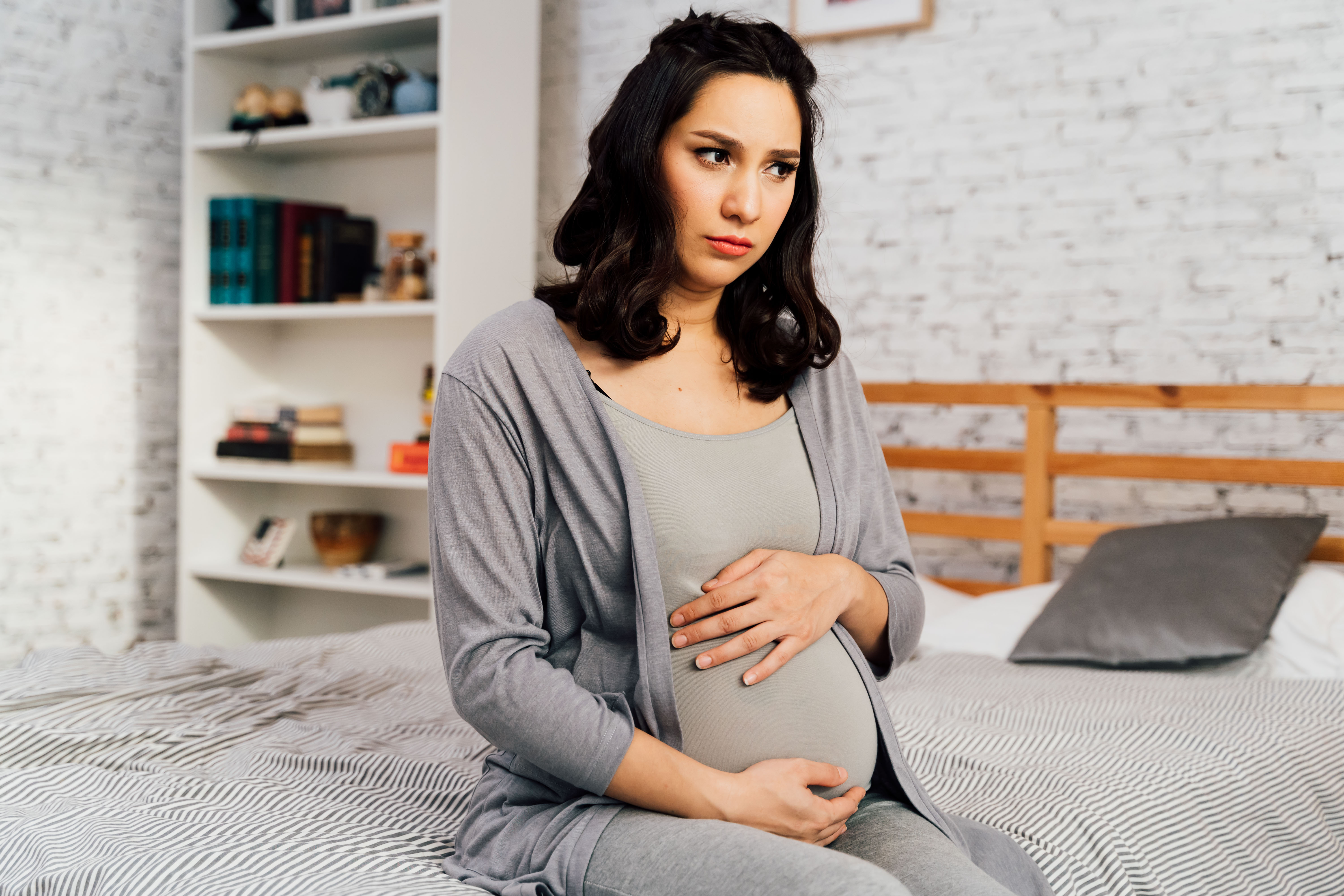
Understanding Tokophobia
Understanding Tokophobia
By Lexi Oately
Pregnancy and birth are often seen as beautiful, empowering experiences, but for some, they bring intense fear and anxiety. This fear can affect daily life, relationships, and decisions about having children. Fear of childbirth exists on a spectrum, from occasional worry to tokophobia, a persistent, overwhelming fear of pregnancy or birth. Studies suggest many pregnant people experience some fear, and for those with tokophobia, it can trigger panic attacks, intrusive thoughts, nightmares, or a strong desire to avoid pregnancy altogether.
Introduction
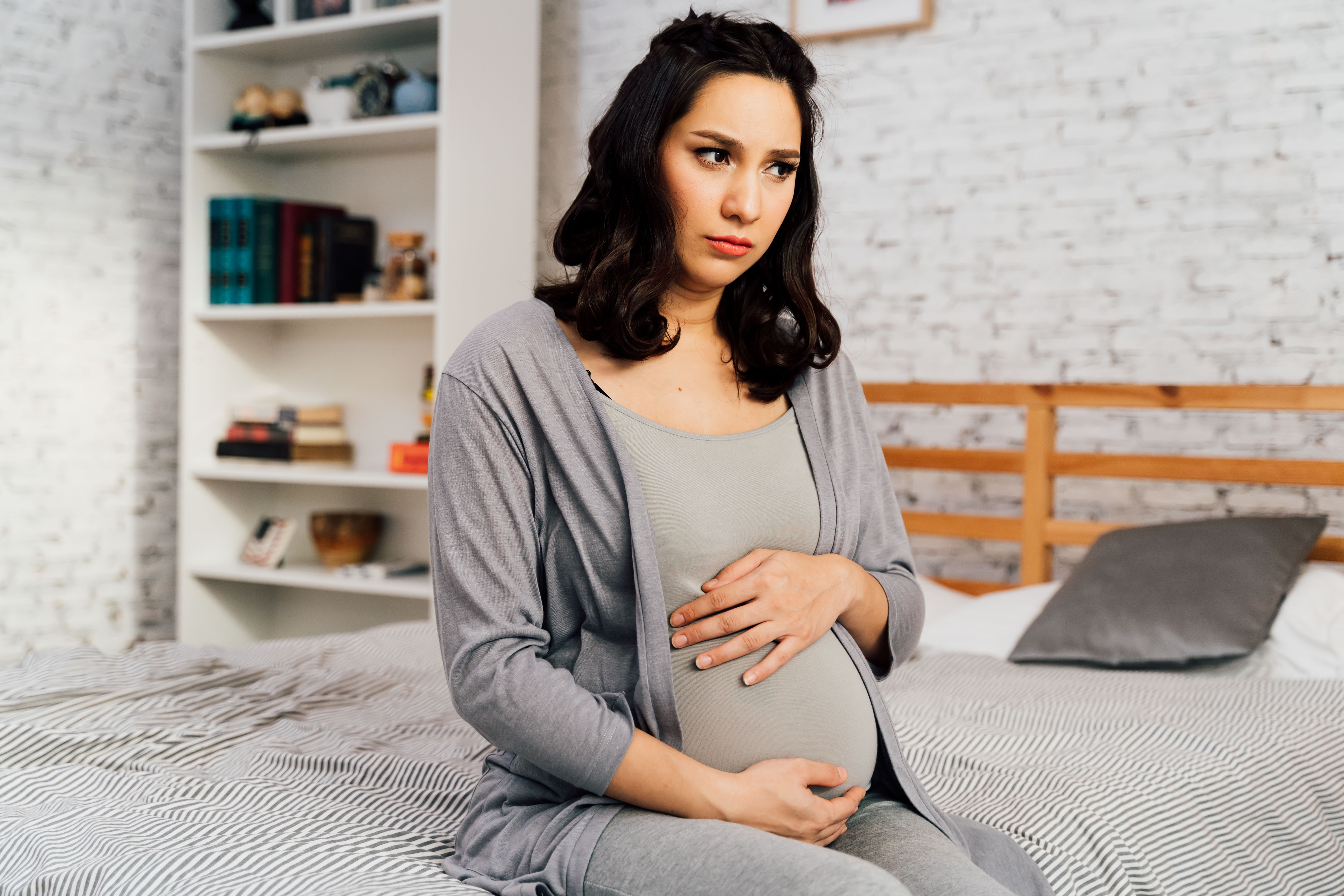
Pregnancy and birth are often portrayed as beautiful, empowering experiences, moments filled with love, hope, and new beginnings, which they absolutely can be and are for many. Yet for others, these same events, or the thought of them are overshadowed by deep fear and anxiety. This fear can be so intense that it affects a person's daily life, relationships, and even decisions about whether to embark on having children at all. Fear of pregnancy and childbirth, like so many things exist on a spectrum from feelings that are fleeting to something that becomes all-consuming and life changing. This end of the spectrum is a phobia called tokophobia, the overwhelming and persistent fear of pregnancy or childbirth. If this is, you know that you are far from being alone. It is in fact, far more common than many people realise. In fact, studies estimate that fear of childbirth affects a large portion of pregnant people worldwide, with some research suggesting that fear can be present in up to 80% of women at some point during pregnancy.
Pregnancy is a very individual journey with many ‘unknowns,’ and there is nothing that anxiety loves more than the unknown. It is not surprising and arguably completely normal if you are feeling some level of apprehension. While it’s normal to feel some apprehension about pregnancy or labour and some level of it helps to keep us safe, tokophobia goes much deeper; it can cause panic attacks, intrusive thoughts, nightmares, and a strong desire to avoid pregnancy altogether. Some may even request elective caesarean sections or choose not to have children because the fear feels so overwhelming.
Tokophobia comes from the Greek words tokos(childbirth) and phobos(fear). It can manifest in two main forms:
Primary Tokophobia
When someone has never been pregnant but has an intense fear of pregnancy or birth. The root causes of this are varied and are not limited to a single cause but can include (but certainly not limited to).
Exposure to traumatic or negative birth stories: Exposure to distressing or negative birth stories from others, online or the media is a contributing factor and can be particularly influential when heard during childhood or adolescence. This can be further magnified when there is a lack of balance in the narrative, for example, an absence of positive stories to counter the more challenging ones.
Medical or sexual trauma: For individuals with a history of sexual trauma, the prospect of birth can feel deeply triggering. This is because childbirth may be experienced as threatening, invasive, or re-traumatising, especially when there are underlying feelings of being out of control or unsafe in one's own body.
History of Anxiety or depression: These can amplify fear, a need for control and make pregnancy. Generalised anxiety, panic disorder, or health anxiety can increase sensitivity to perceived risks around childbirth making pregnancy feel threatening instead of safe.
Observing a Traumatic Birth: First-Hand
Witnessing a traumatic birth can deeply imprint fear.
Fear of Parenting or Life Change: Sometimes tokophobia manifests from deeper fears around becoming a parent, responsibility, or identity changes.
Biological Sensitivity to Threat: Some individuals have heightened threat perception or a nervous system that reacts strongly to uncertainty, making childbirth feel uniquely dangerous.
Cultural or familial Beliefs that frame birth as dangerous, traumatic, or something to be endured rather than supported.
People with primary tokophobia sometimes have a clear understanding of when their fear began or what it may be linked to. For many others, however, the origins feel unclear or a complete mystery. This does not make the fear any less real or valid; it simply means that it may take gentle exploration to understand what lies beneath it in order to overcome it.
Secondary Tokophobia
This type of fear develops following a previous birth experience. While some births are widely recognised as traumatic, it’s important to understand that even a birth described by others as “straightforward” or clinically ‘normal’ can still be experienced as traumatic. Trauma is not defined by an event itself or by other people's standards, but by how you experienced and processed it. This is also why secondary tokophobia does not necessarily present immediately following the birth and may only become apparent much later on.
Your emotional response cannot be measured or judged by professionals or anyone else, because the factors that shaped your experience are entirely personal. For some, the pregnancy or birth itself may be the root cause of the fear; for others, it may have activated deeper, pre-existing experiences or vulnerabilities. In both cases, your response is valid and deserves compassion and support.
Understanding and Recovering
It is important to know that tokophobia and the desire to become a parent can coexist. Many people feel deeply conflicted, longing for a baby while simultaneously experiencing intense fear of pregnancy or childbirth. This inner tension can be confusing and upsetting, and it often brings feelings of guilt or self-judgement. You are not alone, and you are not abnormal. What you are experiencing is a nervous system and mind responding differently to perceived threat and desires.
As we have discovered, Tokophobia is frequently shaped by past experiences, learned fears, or unresolved trauma, which means support needs to go beyond words of reassurance, provision of information or birth planning. “Positive thinking” and logic-based approaches are often insufficient as they do not address the lived, felt experience of fear held in the body. Trauma-informed and trauma-based therapies, on the other hand, work with the nervous system and the body, the mind and the body, prioritising emotional safety, choice, collaboration, and pacing.
Approaches shown to be helpful for reducing fear and trauma-related distress include trauma-focused counselling, EMDR, somatic and body-based therapies, parts-based work, and Emotional Freedom Techniques (EFT). While these therapies differ in method, they share a common evidence-supported aim: reducing physiological and emotional fear responses while allowing difficult experiences to be processed without re-traumatisation. There is no one technique that is better than the other. It is about finding the technique that works best for you and the right therapist, coach, or counsellor for you based on trust and understanding.
Breaking the silence surrounding tokophobia is the first step toward healing. By recognising it as a valid and treatable condition, we open the door to recovery. Tokophobia highlights that childbirth is a profoundly emotional event, not just a physical one, and it demands understanding and compassion.
Healing from tokophobia is not about dismissing fear or being pressured into decisions. Instead, it involves cultivating sufficient emotional and psychological safety for clarity to emerge. This ensures that any decision regarding parenthood is rooted in self-trust, rather than driven by fear.
With compassionate, trauma-informed support, it is possible to honour both the fear and the desire to parent, allowing you to move forward feeling more supported, grounded, and empowered.
If any of this resonated with you I invite you to book a discovery call with me so we can chat further and explore how I can support you in starting to bid goodbye to your fear.
About My Expert Midwife
This blog also features on My Expert Midwife
At My Expert Midwife, we believe motherhood deserves better, better support, better conversations and better products. Created by real midwives, our expert-made skincare and trusted guidance are here to support you through every stage of your journey, from pregnancy to parenthood. No fluff, just real solutions designed with care.
